From index bloat to organic orders on a Shopify store
How I fixed a Shopify store's indexing, speed and content until Google's AI named the brand and organic search started bringing orders.
- Client
- Atlas and Maya
- Scope
- End-to-end SEO on Shopify: technical, on-page, content, AEO and GEO
- Period
- Since June 2026
- Result
- Indexed pages 489 to 1,220. AI mentions in the UAE 50 to 140. First organic orders in October.
What this shows
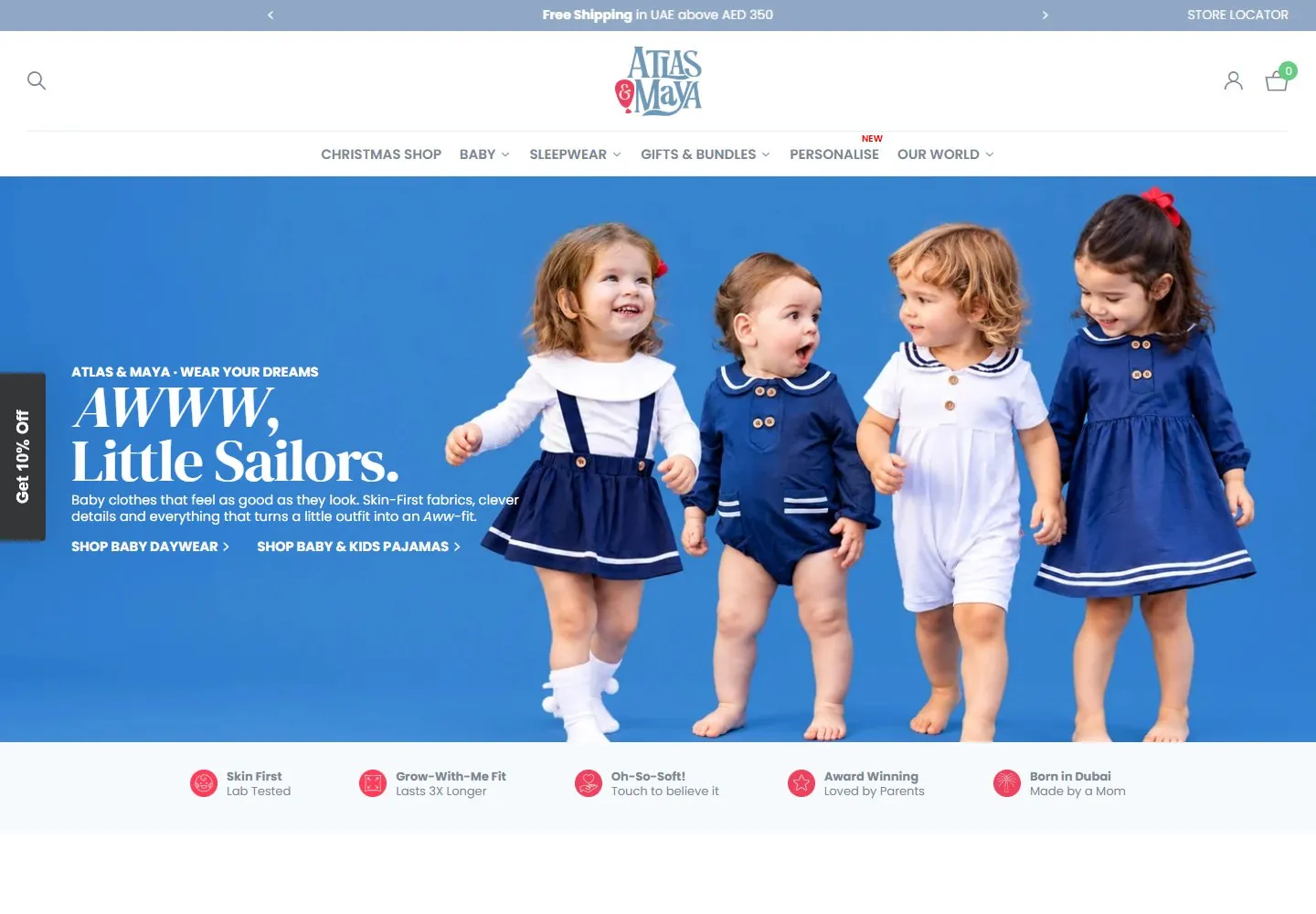
Five months of e-commerce SEO on one Shopify store, from the technical repair to the first organic orders. Atlas and Maya sells bamboo babywear in the UAE. It is also the first client where my fabric background and my search work apply at once.
Results
- Organic search now brings in sales. In September it brought none.
- Visits from Google went from 43 a month before I started to 117 in October.
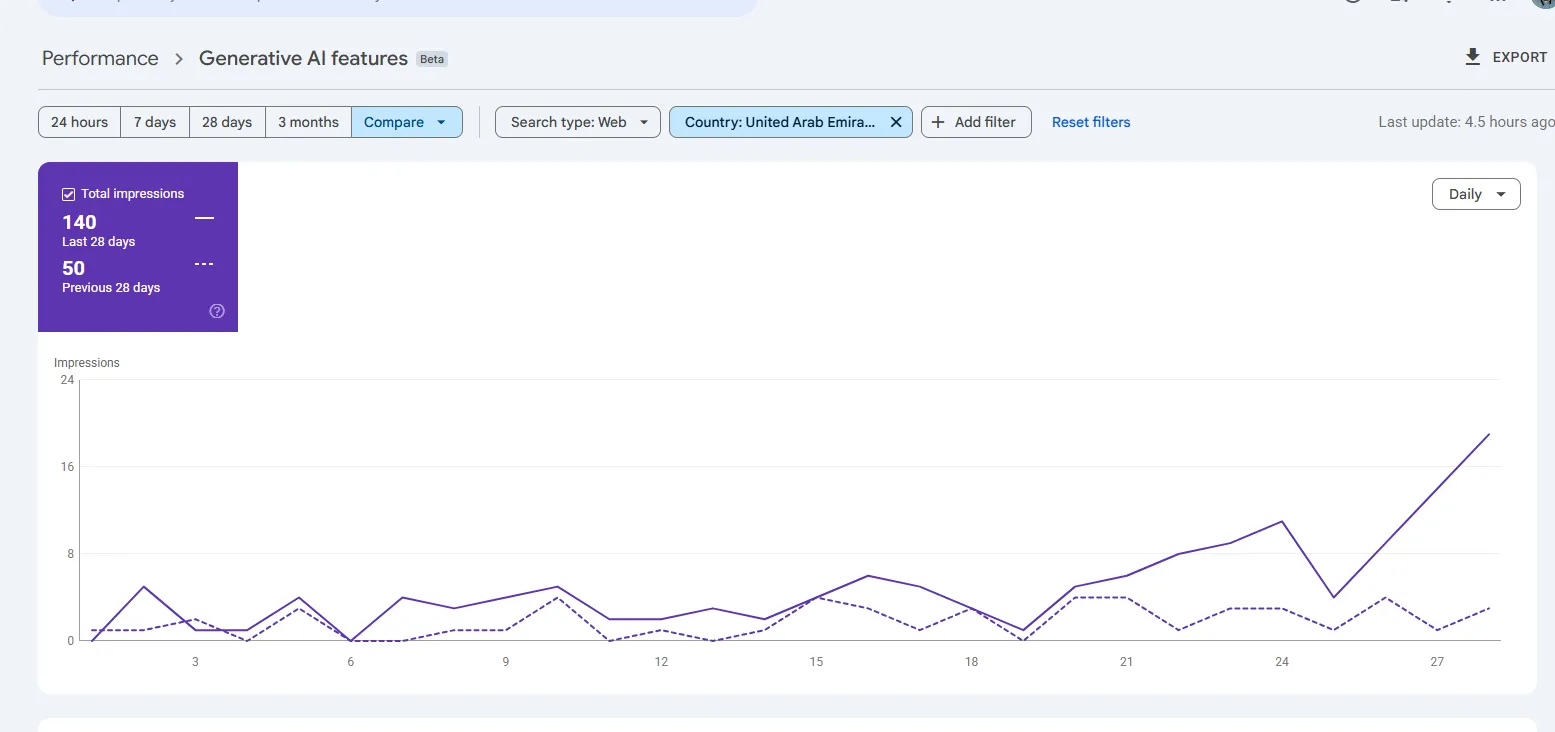
- Google’s AI quoted the store to UAE shoppers 140 times in four weeks, up from 50.
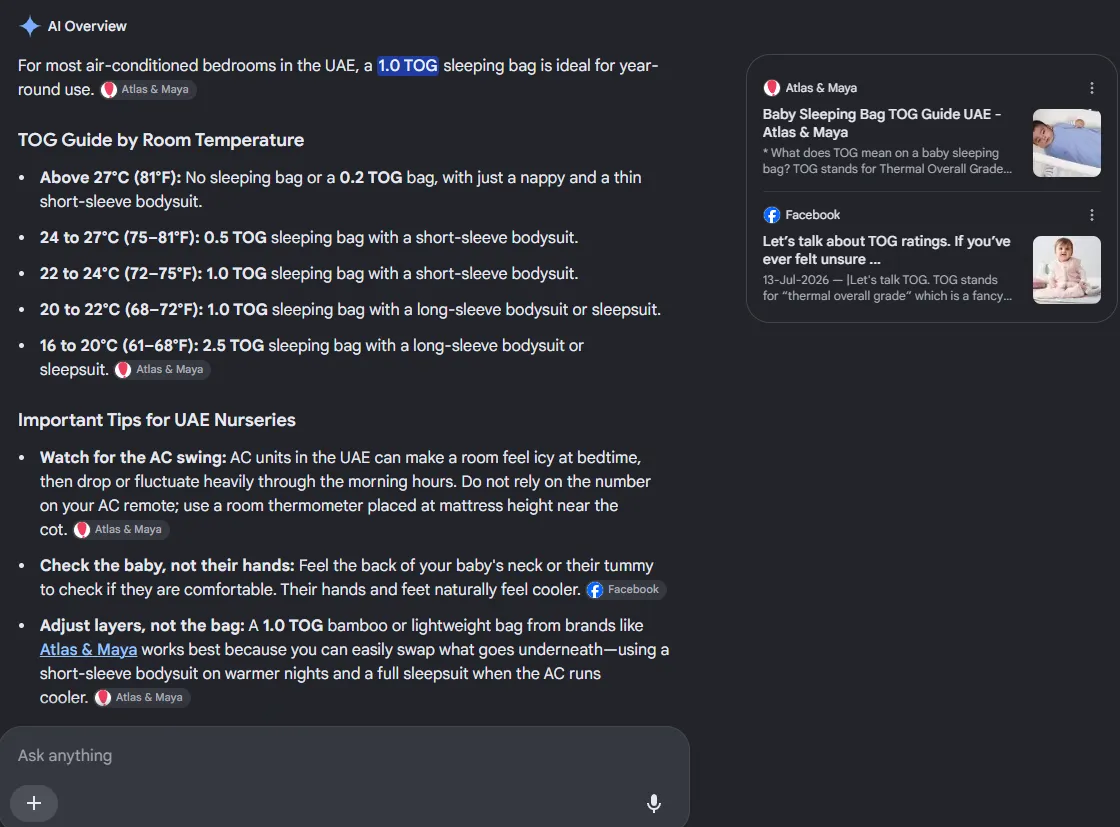
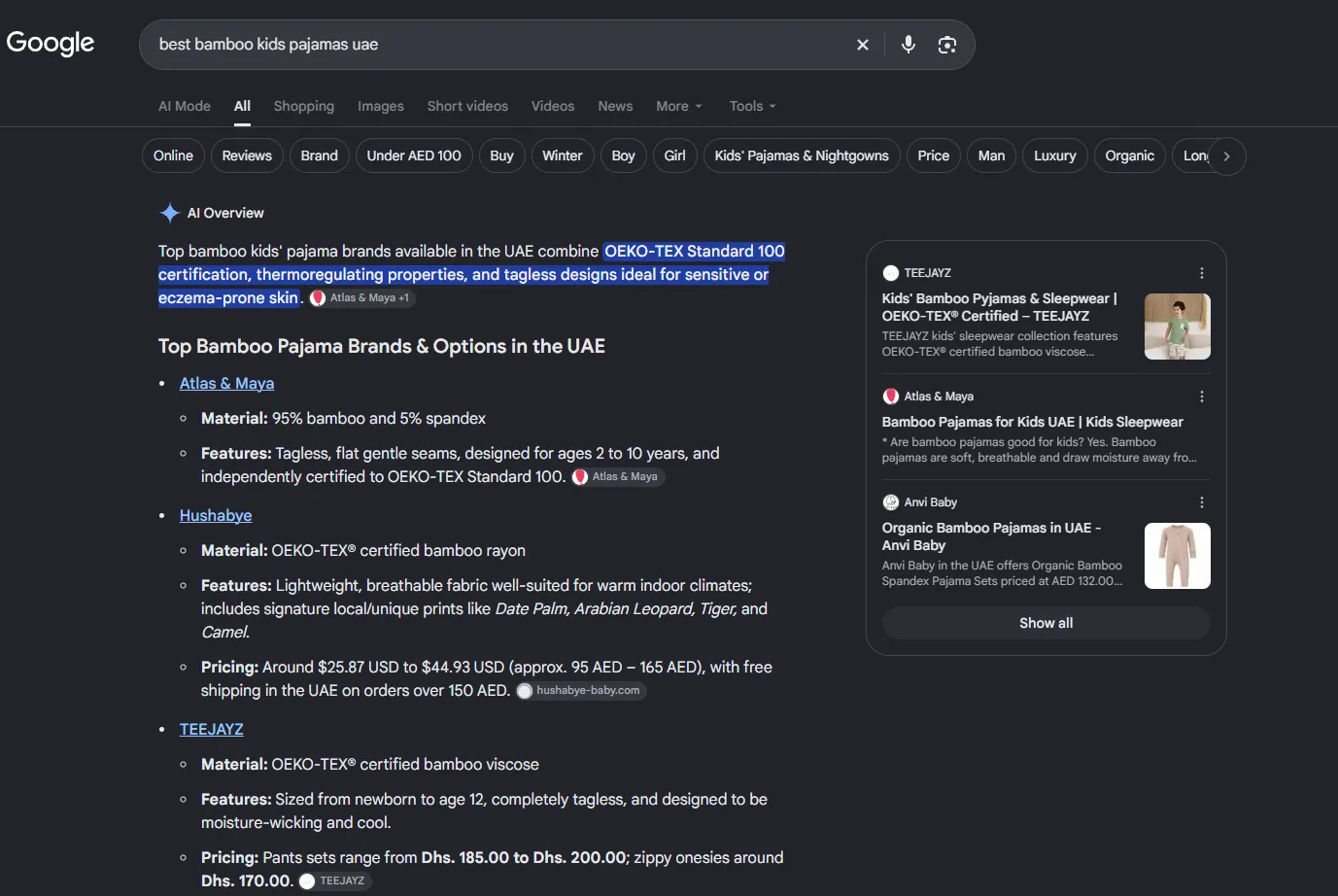
- For “What TOG does my baby need in UAE”, Google’s AI answers from a guide I wrote and names no other brand.
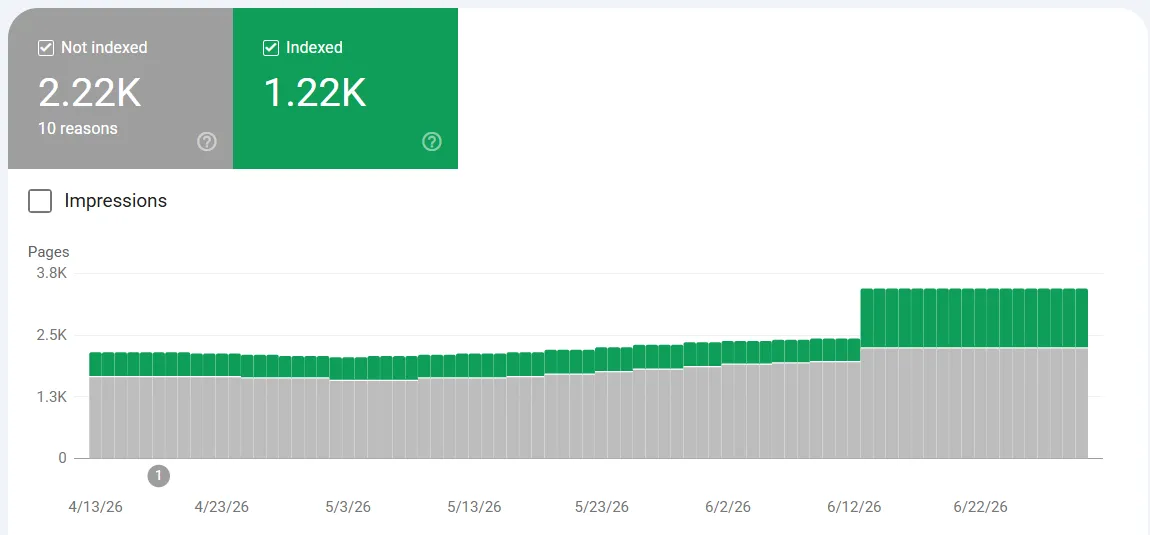
- Indexed pages went from 489 to 1,220 in four weeks.
- All 82 measured mobile pages pass Google’s Core Web Vitals.
- The UAE, the market the store ships to, went from being outranked by the US to 44% of all Google visits.
The starting point
Google knew 2,332 URLs on the store and had indexed 489 of them, 21%. Almost every click came from people typing the brand name. Searches like “bamboo pajamas” and “bamboo sleepsuits” showed the store at positions 24 to 65, where nobody clicks. The US saw the store three times as often as the UAE, where it actually sells.
This is the most common pattern I see on Shopify. The store looks fine to a customer. To Google it is mostly noise.
Google was spending its time on junk pages
Shopify generates URLs for every filter, sort order and tracking parameter. Add test pages, discontinued products and SEO apps that create pages of their own, and Google spends its crawl on copies instead of products.
I exported every URL in Search Console’s indexing report and sorted them by cause.
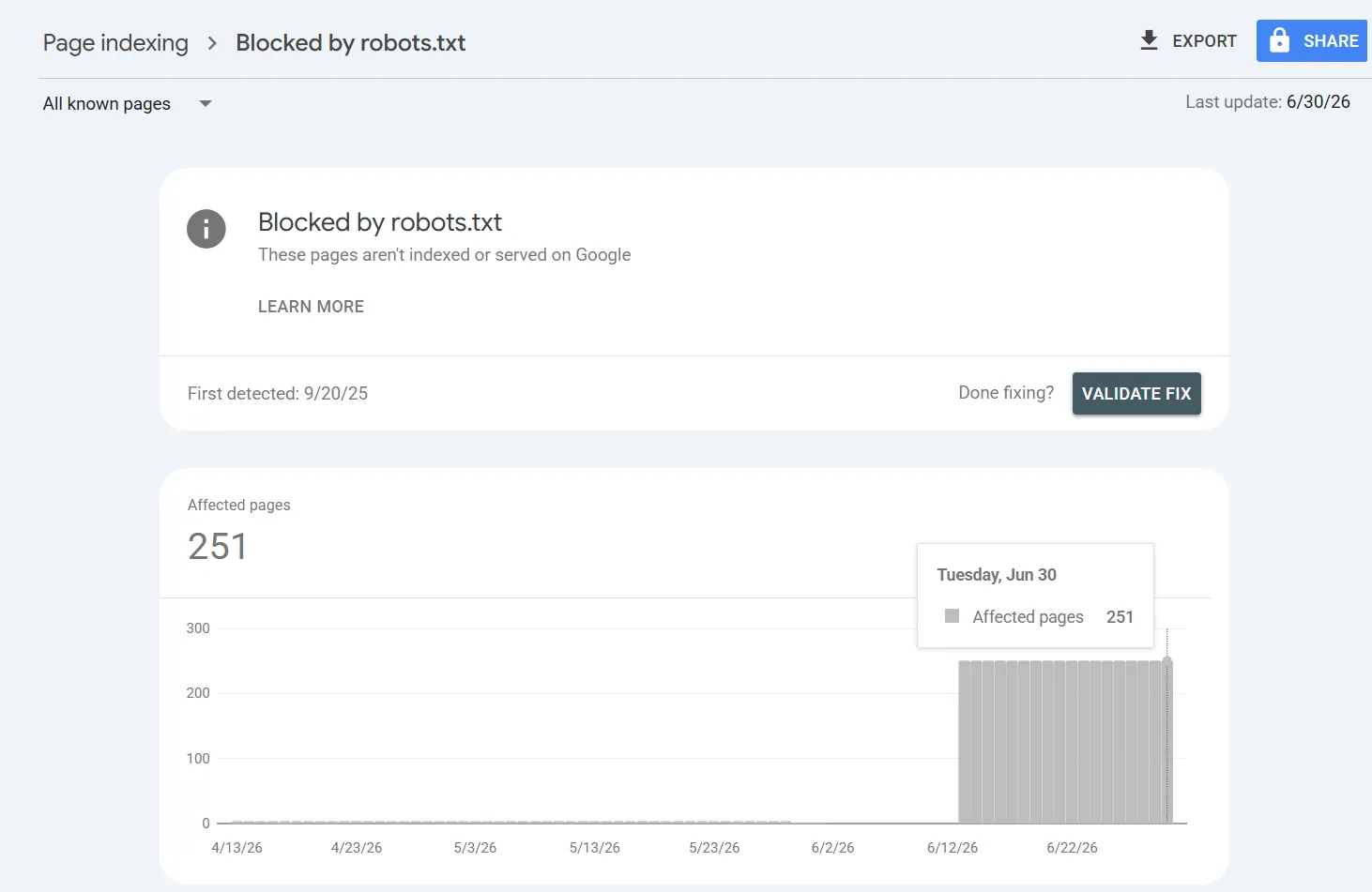
- Rewrote robots.txt to block filter, sort and tracking URLs. Google confirmed 251 junk pages blocked within days.
- Redirected 49 dead product links to the closest live product or collection.
- Removed test pages and drafts, and linked and submitted real pages Google had missed.
- Told Google that thousands of auto-generated addresses were copies of real pages, so it files them as duplicates.
Indexed pages went from 489 to 1,220 in four weeks. Pages Google had read and rejected fell from 664 in August to 219 in October. A full check of all 629 live pages in October found no broken pages, no broken links and no duplicate addresses.
Two SEO apps were working against the store
Two overlapping SEO apps were rewriting files, generating pages and loading duplicate code on every page. They undid fixes as fast as I made them. From mid-July Google marked around 80 pages as too slow on a phone.
I removed them. On 15 September the store passed Google’s mobile Core Web Vitals, with 82 measured pages rated good and none poor. That matters for AI search too. Two thirds of the times Google’s AI quoted the store, someone was reading on a phone.
The Arabic pages were invisible
The Arabic setup was technically correct, but the pages carried almost no Arabic, so Google treated them as copies of the English ones. The fix is real Arabic content, not more tags. The first Arabic guide is already quoted in Google’s AI answers.
Finding out what Google’s AI quotes
By September Google’s AI had used the store 978 times in three months. Daily AI mentions were up 27% while ordinary search appearances fell 13%. I wanted to know which pages earned them.
I checked every page. A written guide was about ten times more likely to be quoted than a product page. Around twenty written pages produced 45% of all AI mentions. The third most quoted page on the site was a 2024 gift guide sitting on page three of ordinary results. The store had seven posts, which was the ceiling.
So the next step was writing, not more product pages.
Writing guides that AI answers quote
I published four buying guides and rebuilt the gift guide. Each answers a question parents in the Gulf actually type, states the fabric facts plainly, and ends with short questions and answers that AI can lift. They are written from the founder’s own experience, which is what Google now rewards over generic content.
This is where the fabric background did the work. TOG is a textile measure, the thermal resistance of a fabric. Which TOG a baby needs in a bedroom with the AC on all night is a fabric question first.
In the four weeks to 18 October:
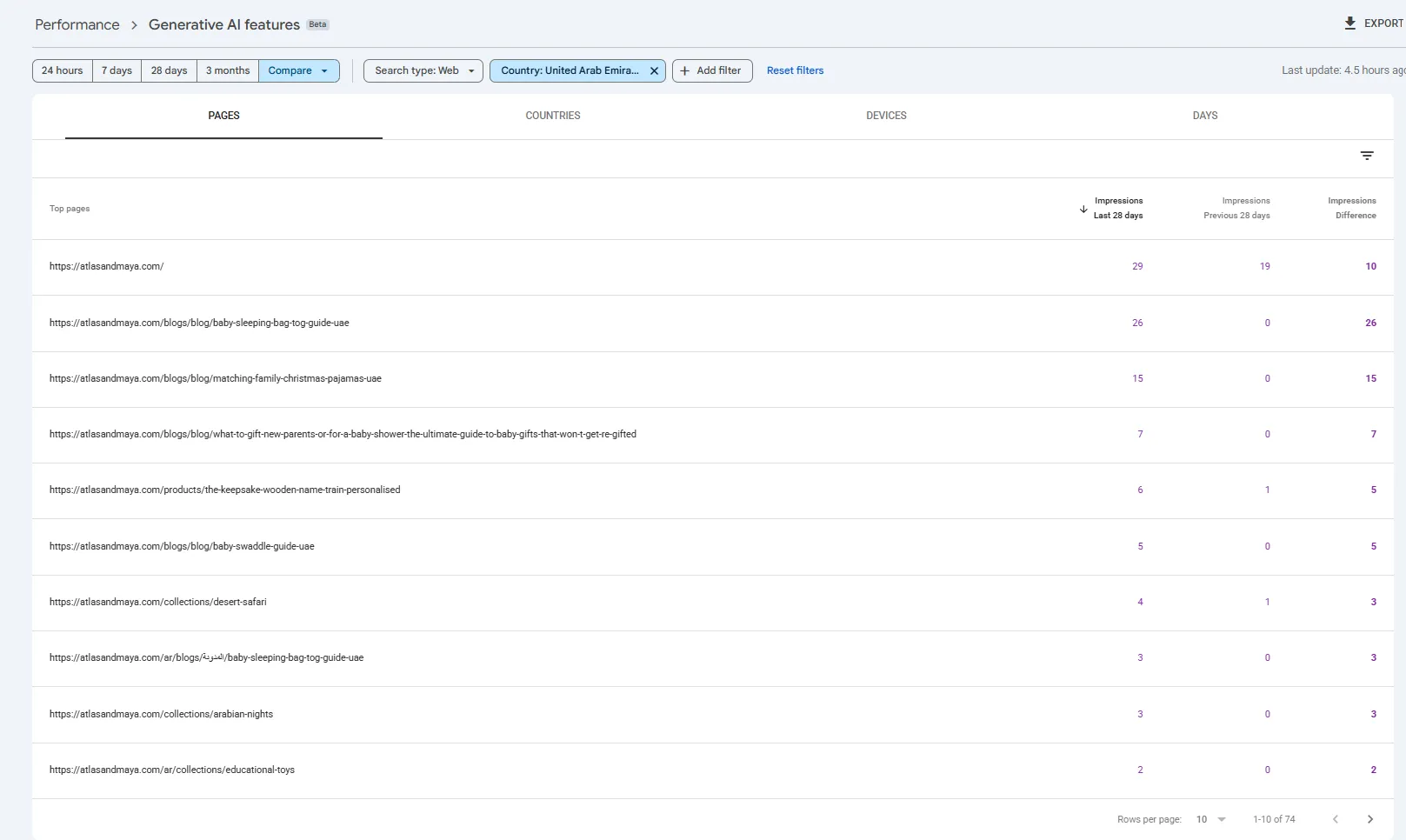
- Google’s AI quoted the store to UAE shoppers 140 times, up from 50. Guides that had been live ten days produced 40% of those mentions.
- Four of the six most quoted pages were the new guides. The sleeping bag guide went from zero to 26 mentions, second only to the homepage.
- For “What TOG does my baby need in UAE”, Google’s AI cites the guide four times against one other source and names Atlas and Maya as the only brand.
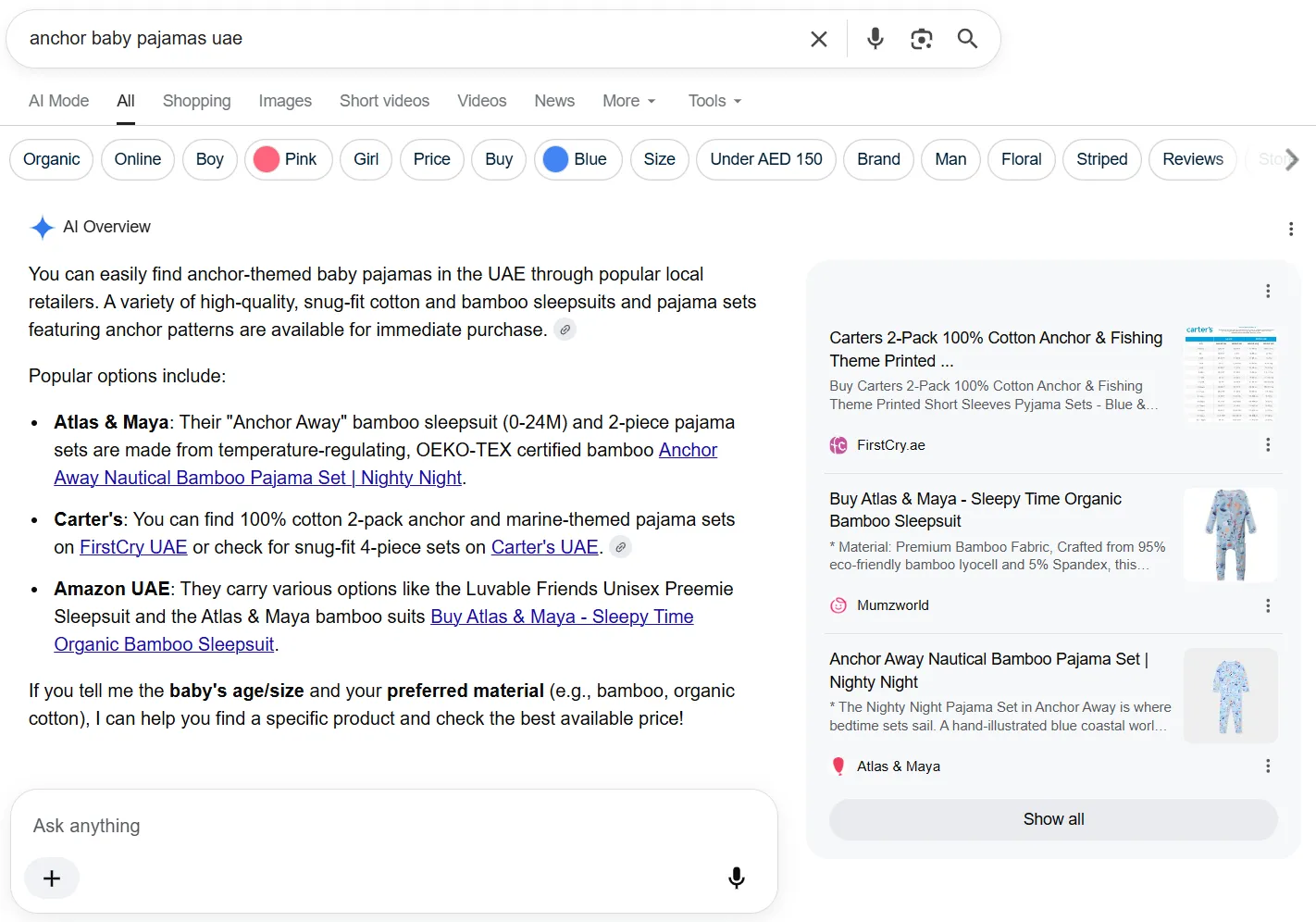
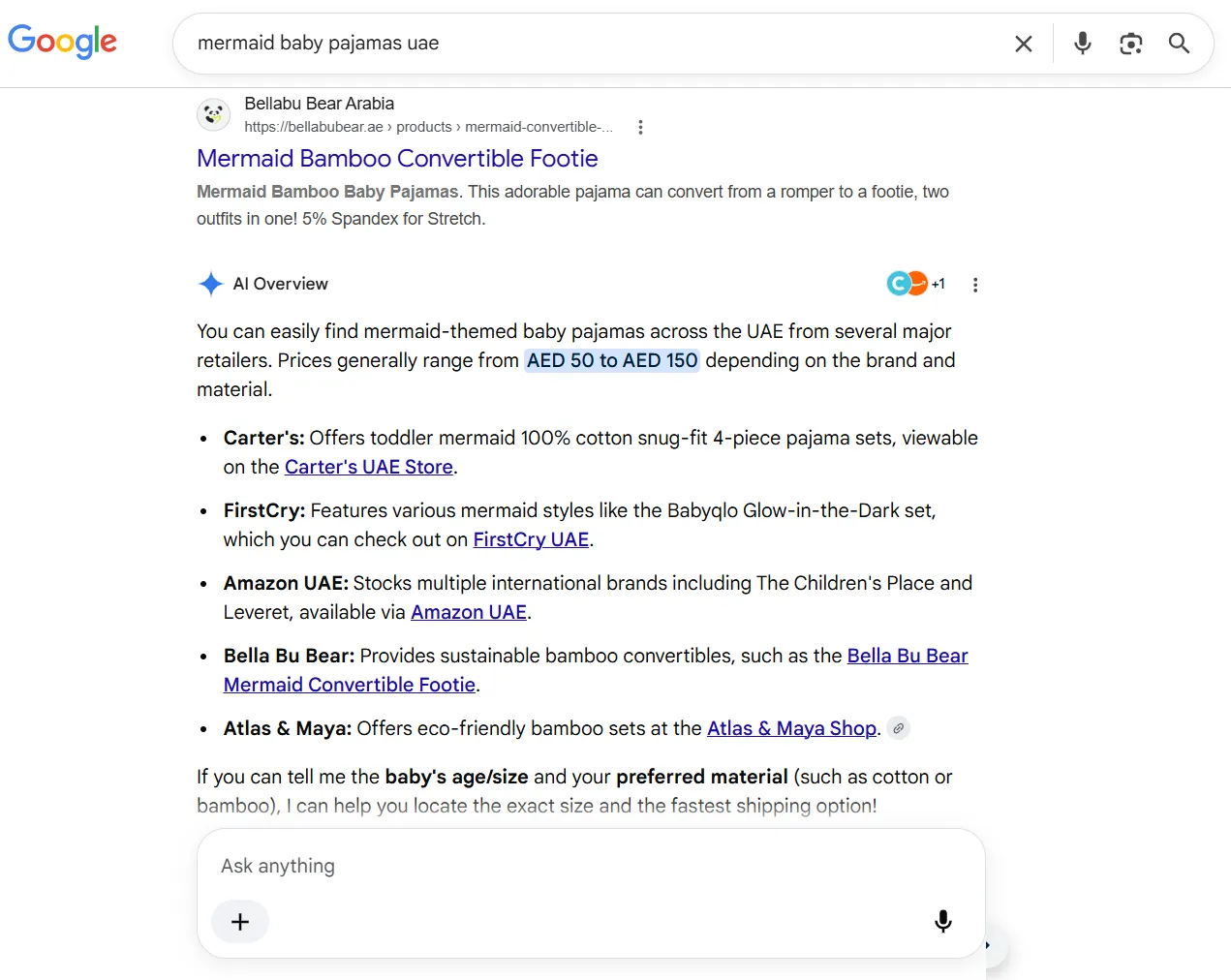
- For “anchor baby pajamas uae”, Google’s AI lists Atlas and Maya first. For “mermaid baby pajamas uae”, it names the store beside Carter’s, FirstCry and Amazon.
Internal links so new pages get found in days
Most pages sat on their own, with nearly every link pointing at the same forty menu pages. I added about 30 links inside the store, each written in the words parents search with. Every new guide was linked from the pages Google already visits most on the day it went live.
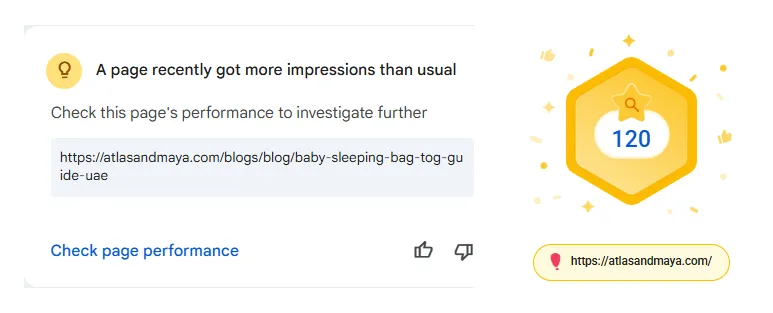
- Within a week, Search Console flagged the sleeping bag guide on its own for a jump in impressions. It was shown 148 times in its first week, at about position 7 for “baby sleeping bag” and “newborn sleeping bag”.
- The bamboo sleepsuits collection rose from 31st to 21st for “bamboo sleepsuit” and from 26th to 18th for “bamboo sleepsuits”.
I also merged a duplicate collection that was splitting Google’s attention, fixed redirect chains on the seasonal pages before the season, wrote full copy for sixteen collections and reviewed all 190 product names.
Ranking in the right country
The store ships to the Gulf, but Google was showing it mainly to Americans. The guides were written around UAE searches, from AC-cooled nurseries to a Gulf Christmas.
The UAE overtook the US in September. By October, UAE visits had risen 82% in a month, the average UAE position had moved from 16th to 13th, and the UAE was 44% of all Google visits. UAE shoppers click at twice the site average. Searches for the brand by name doubled.
Visits that became orders
Google sent two milestone notices: 100 visits in 28 days on 7 September, the first time the store had crossed it, and 120 on 18 October. The share of people who click when they see the store went from 1.0% to 2.3%.
By October that traffic was turning into sales. That is what every fix above was for.
One number has not moved yet. Visits from people who did not search the brand name held steady, 73 against 76. The guides are being shown, and new pages usually take four to eight weeks to turn views into steady visits.
What this means for your store
The order is the method. Clear the junk so Google sees your real products. Remove the apps that fight you. Find out which pages AI already quotes, then write more of them with real product knowledge. Link them so Google finds them in days. Then measure orders, not rankings.
What Google's AI says now
What Google's reports show
Want the same result? See how I work on SEO, or tell me about your business.
Next project
Hysab Kytab
SEO and AI answers
Cited in Google's AI answer beside the national banks
Tell me what you are selling and where.
Send the store URL and the markets you want to grow in. I will reply with what I would look at first.
Book a consultation